

750,000+ Happy Teachers & School Districts

300,000+ ★★★★★

30,000+ Resources for all K-2 Standards

Sale!

Math Toothy® Bundle for 1st and 2nd Grade

(10248 customer reviews)

Original price was: $40.00.Current price is: $24.00.

Save $16.00 (40% OFF)

Add to list

Math Toothy® Bundle for 1st and 2nd Grade

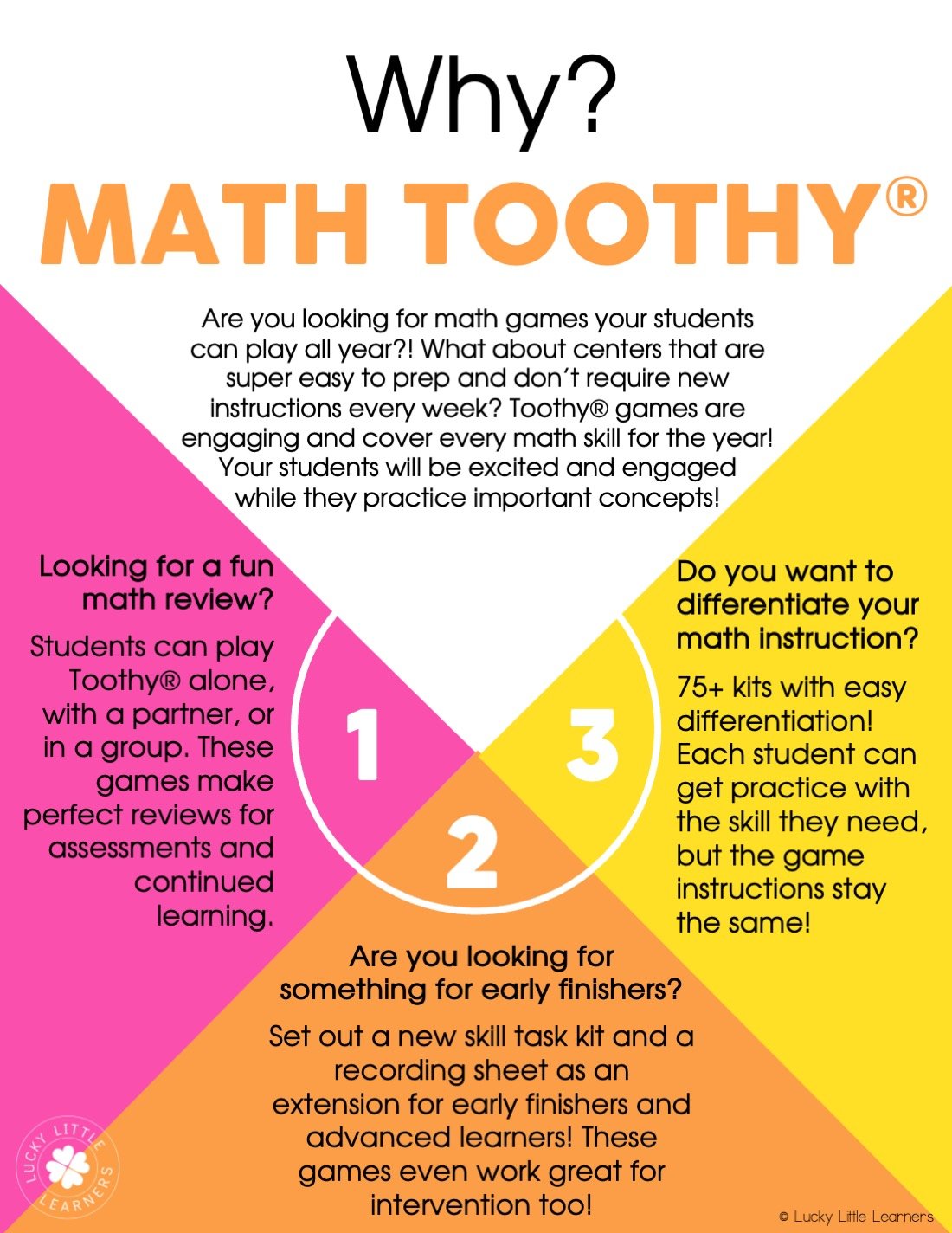
Teach ONE game. Practice 75+ skills. Watch your students work independently all year long without you having to re-explain how centers work every single week.

No more interruptions during small groups. No more re-teaching how to play. Just real independence.


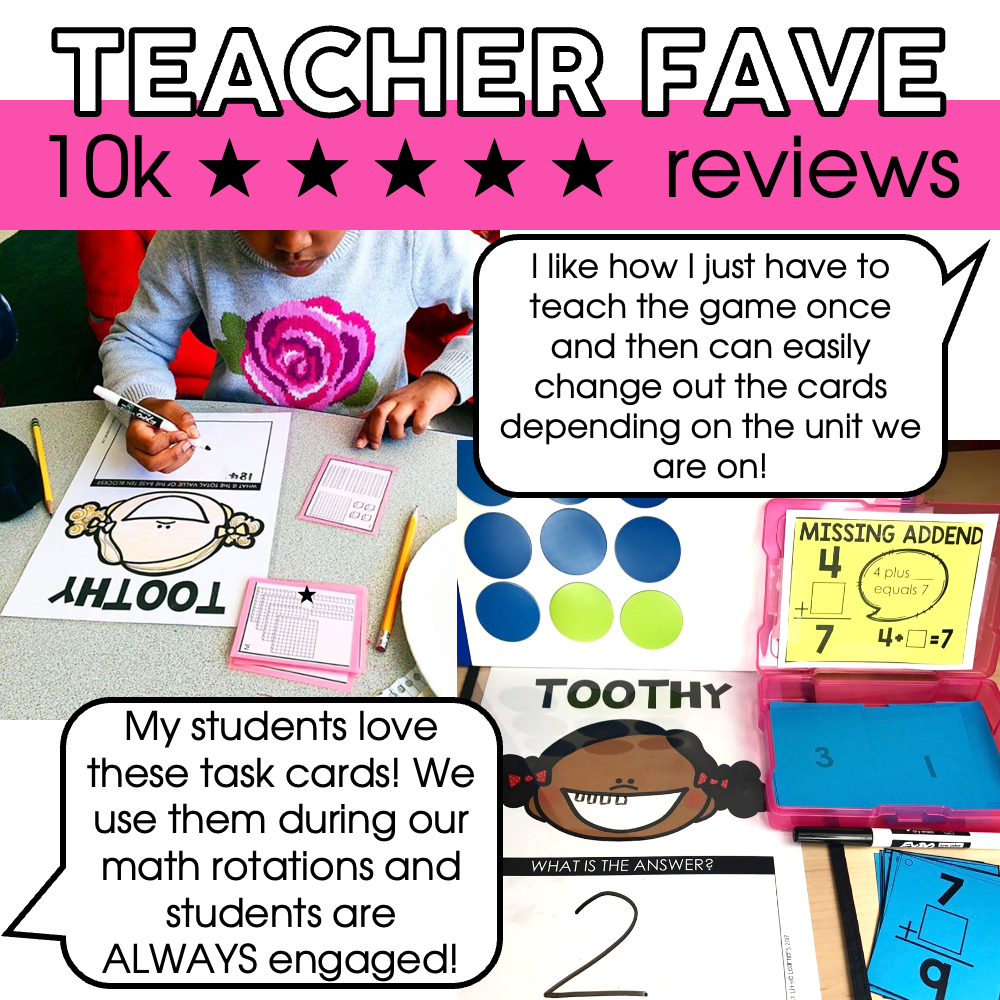
⭐⭐⭐⭐⭐ I honestly don’t think I could survive without my Toothy kits! These are perfect for small group instruction, independent practice, partner work or stations, and even to give to tutors you may have come to assist students in a small group setting. – Lacie L.

⭐⭐⭐⭐⭐ This has made a great impact in my students’ learning. Not only can they review concepts independently, but they are so engaged with the game. I don’t have to reexplain the game for every new concept, they already know how to play. Every time we play, they cheer. Thank you!! – Holly E.

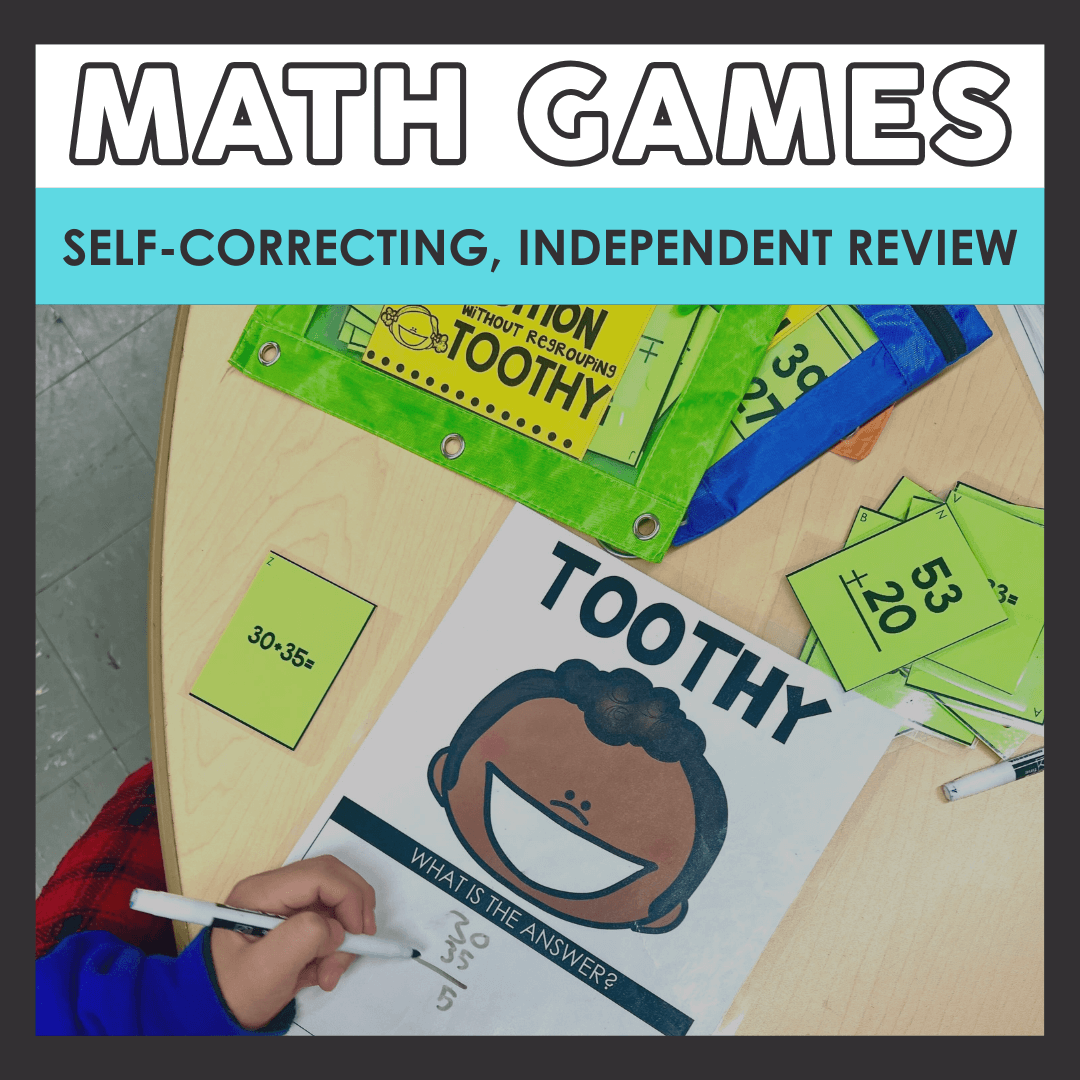
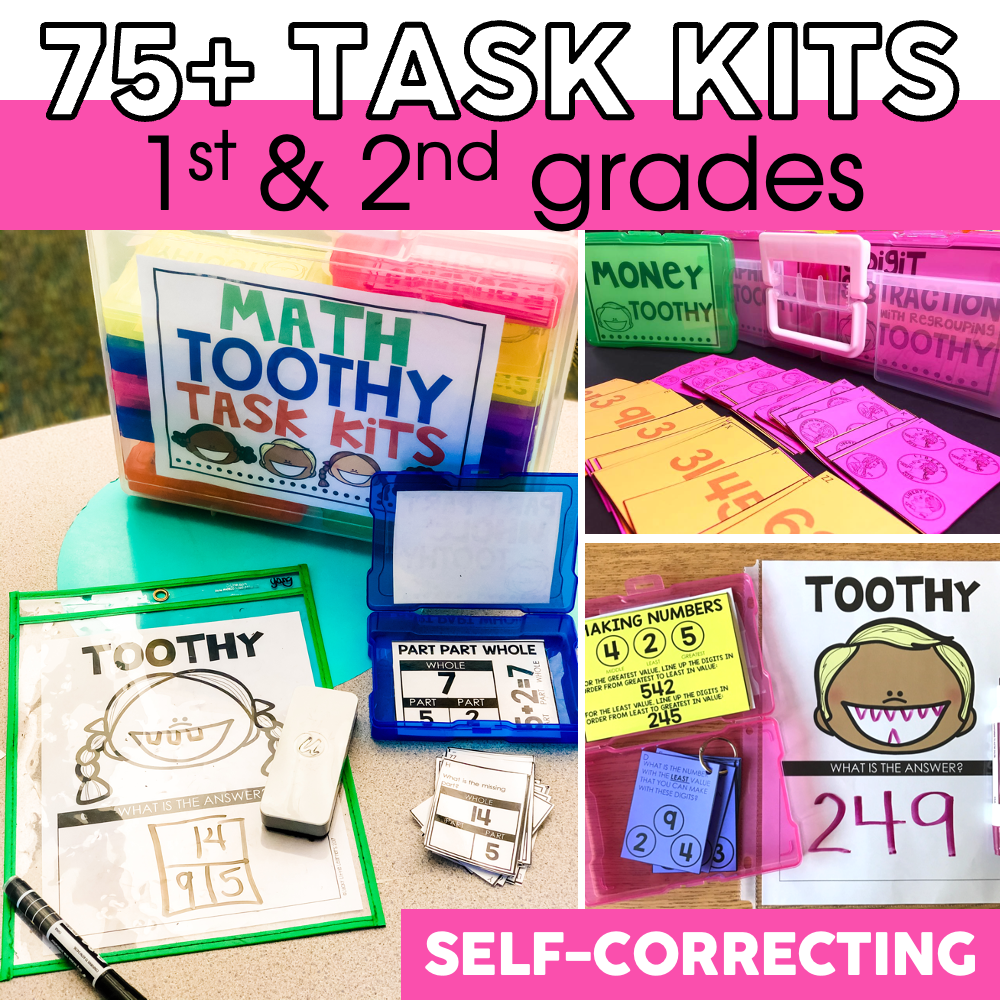
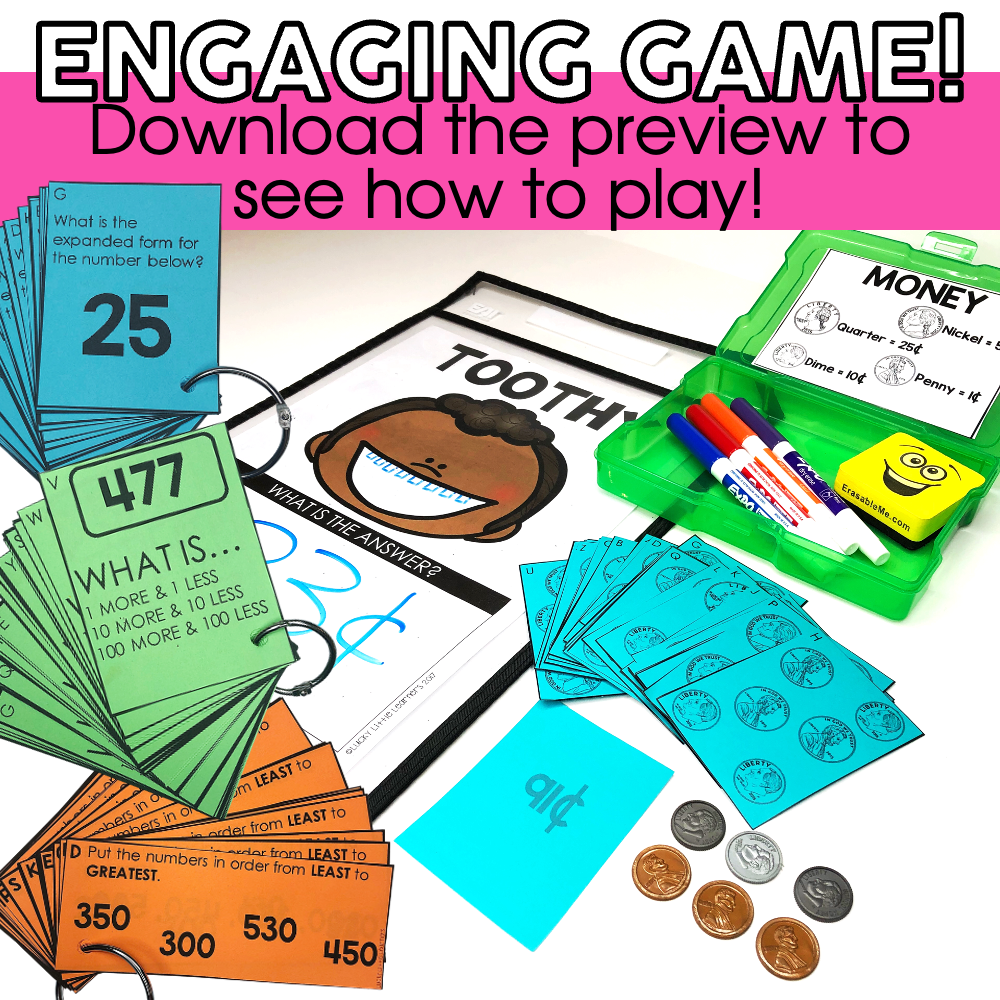
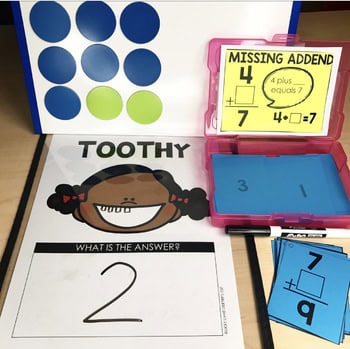
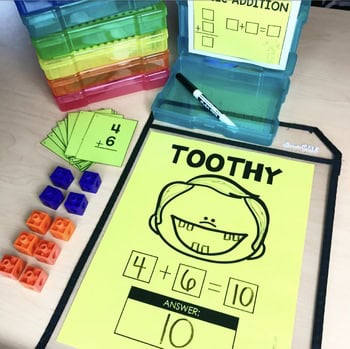
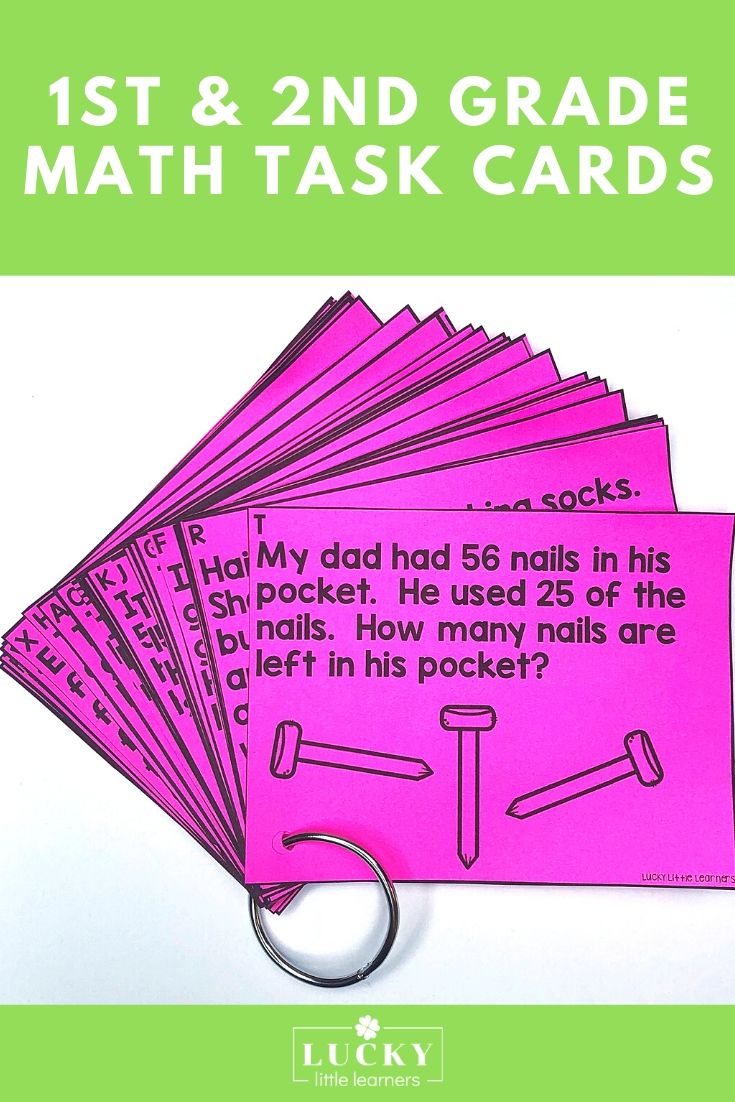
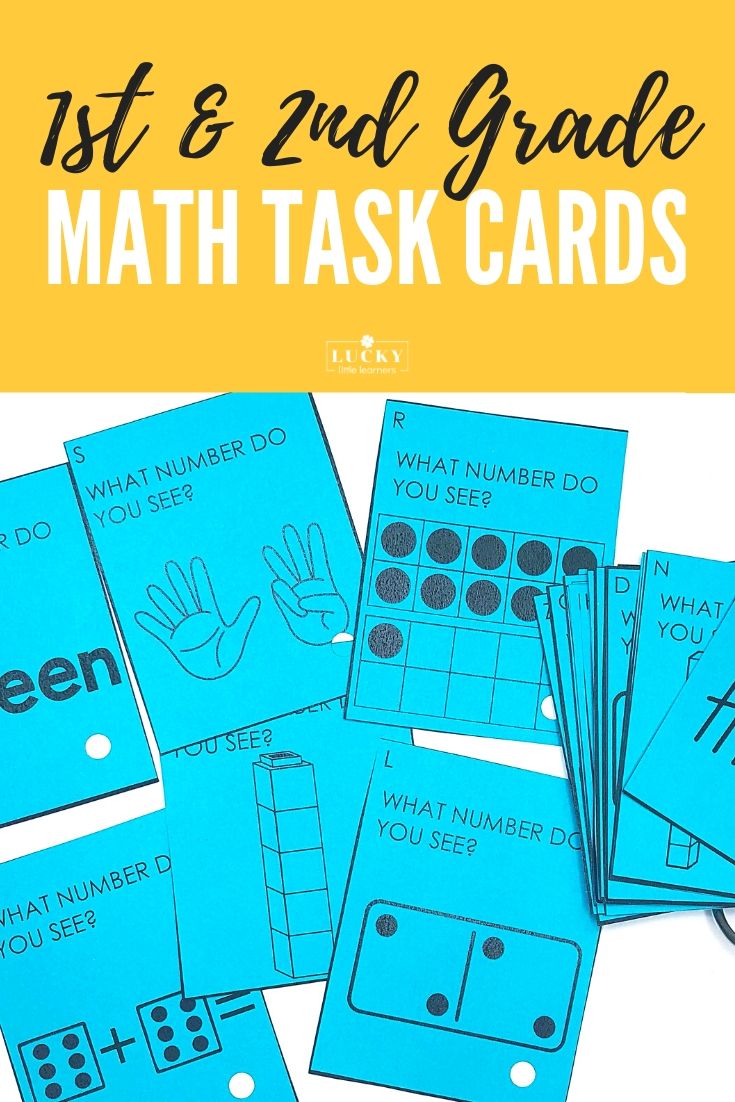
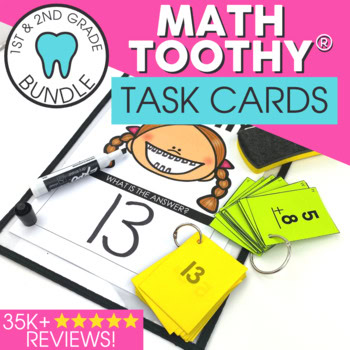
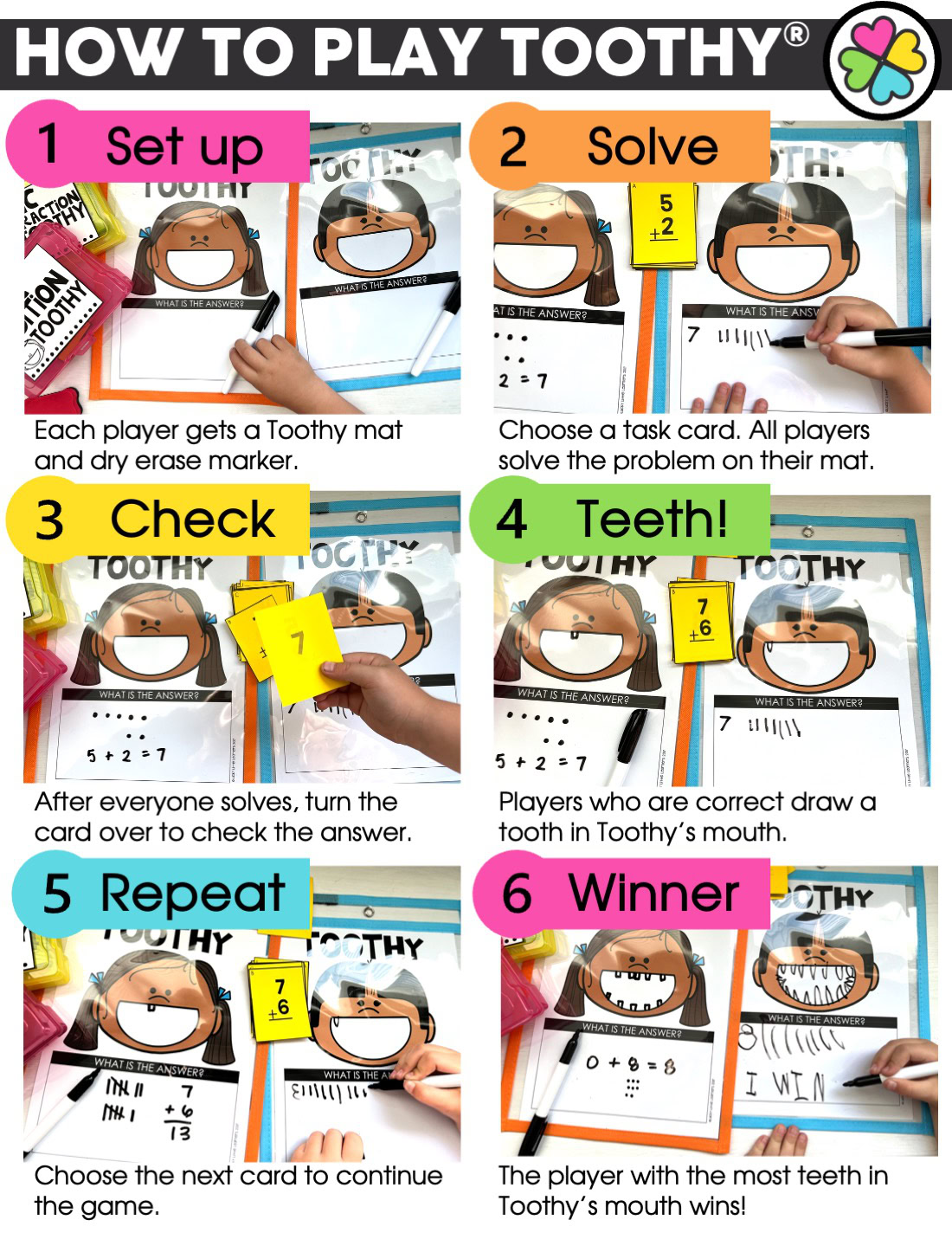
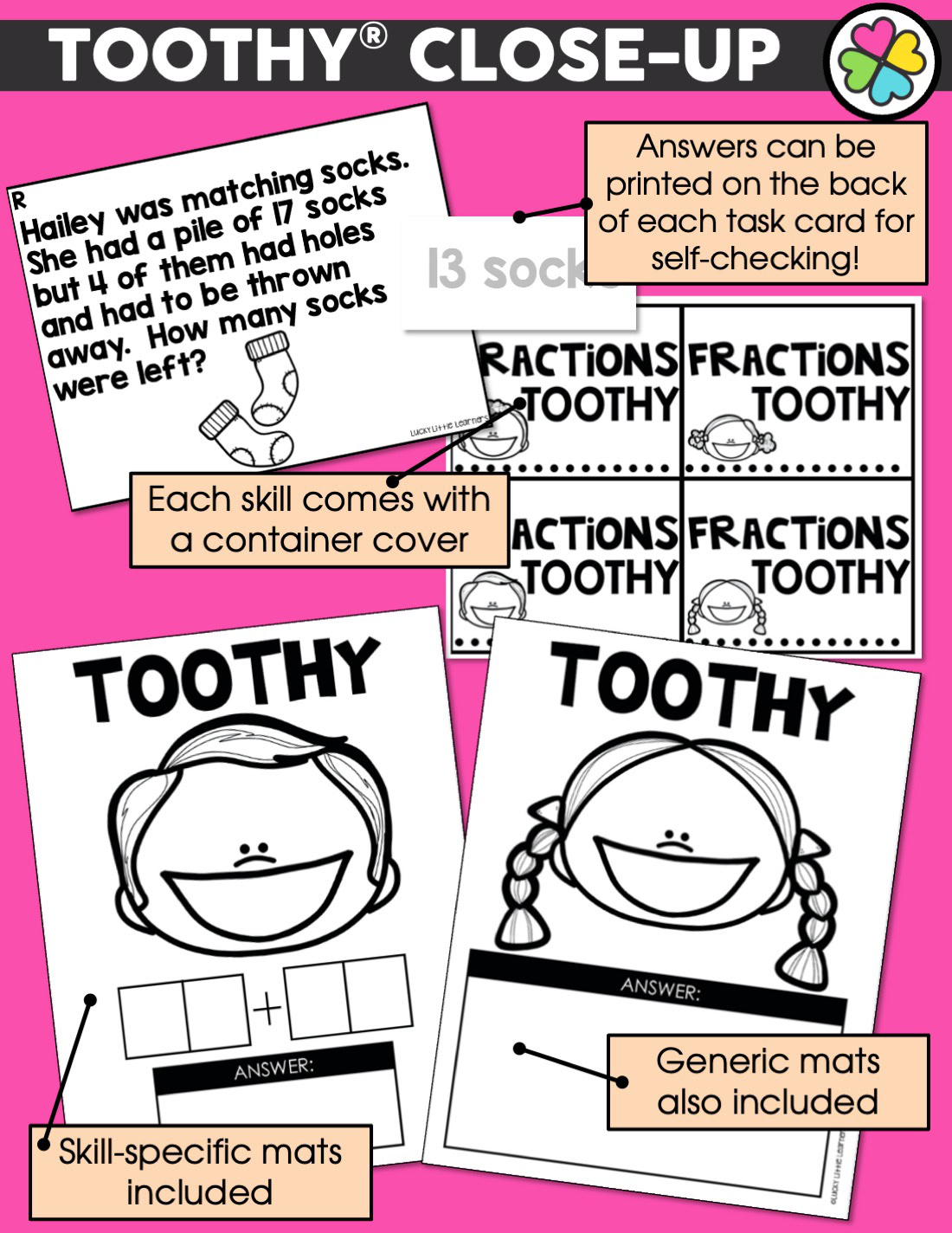
Toothy® task kits are highly engaging task card math games or math centers that allow students to practice math skills and answer questions in a fun, motivating way. The answers on the back of the math task cards make the activity self-paced and self-correcting.

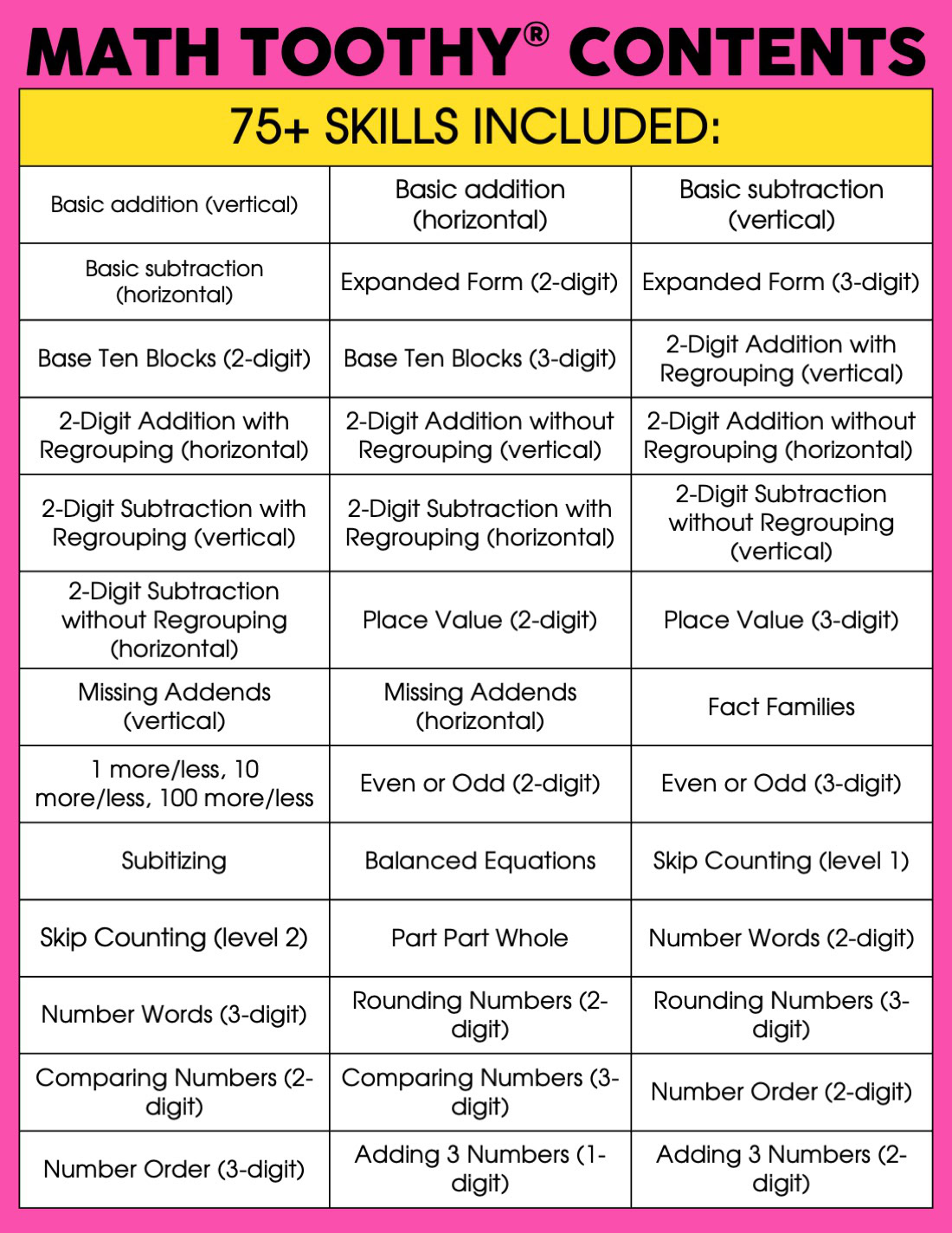
SKILLS INCLUDED:

Toothy® task kits are highly engaging task card math games or math centers that allow students to practice math skills and answer questions in a fun, motivating way. The answers on the back of the math task cards make the activity self-paced and self-correcting. Toothy® task kits are highly engaging task card math games or math centers that allow students to practice math skills and answer questions in a fun, motivating way. The answers on the back of the math task cards make the activity self-paced and self-correcting.

  • Basic Addition (vertical & horizontal)
  • Basic Subtraction (vertical & horizontal)
  • Expanded Form (2-digit)
  • Expanded Form (3-digit)
  • Base Ten Blocks (2-digit)
  • Base Ten Blocks (3-digit)
  • 2-Digit Addition with Regrouping (vertical & horizontal)
  • 2-Digit Addition without Regrouping (vertical & horizontal)
  • 2-Digit Subtraction with Regrouping (vertical & horizontal)
  • 2-Digit Subtraction without Regrouping (vertical & horizontal)
  • Place Value (2-digit)
  • Place Value (3-digit)
  • Missing Addends (vertical & horizontal)
  • Fact Families
  • 1 more/less, 10 more/less, 100 more/less
  • Even or Odd (2-digit)
  • Even or Odd (3-digit)
  • Subitizing
  • Balanced Equations
  • Skip Counting (level 1 & 2)
  • Part Part Whole
  • Number Words (2-digit)
  • Number Words (3-digit)
  • Rounding Numbers (2-digit)
  • Rounding Numbers (3-digit)
  • Comparing Numbers (2-digit)
  • Comparing Numbers (3-digit)
  • Number Order (2-digit)
  • Number Order (3-digit)
  • Adding 3 Numbers (1-digit)
  • Adding 3 Numbers (2-digit)
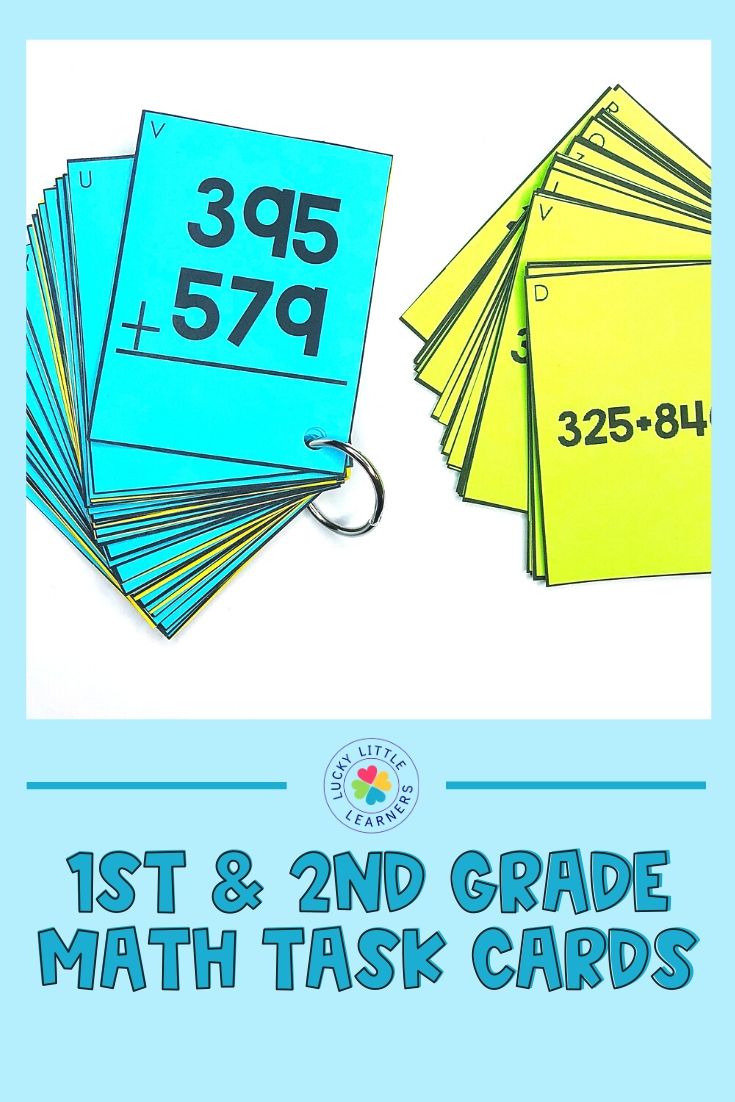
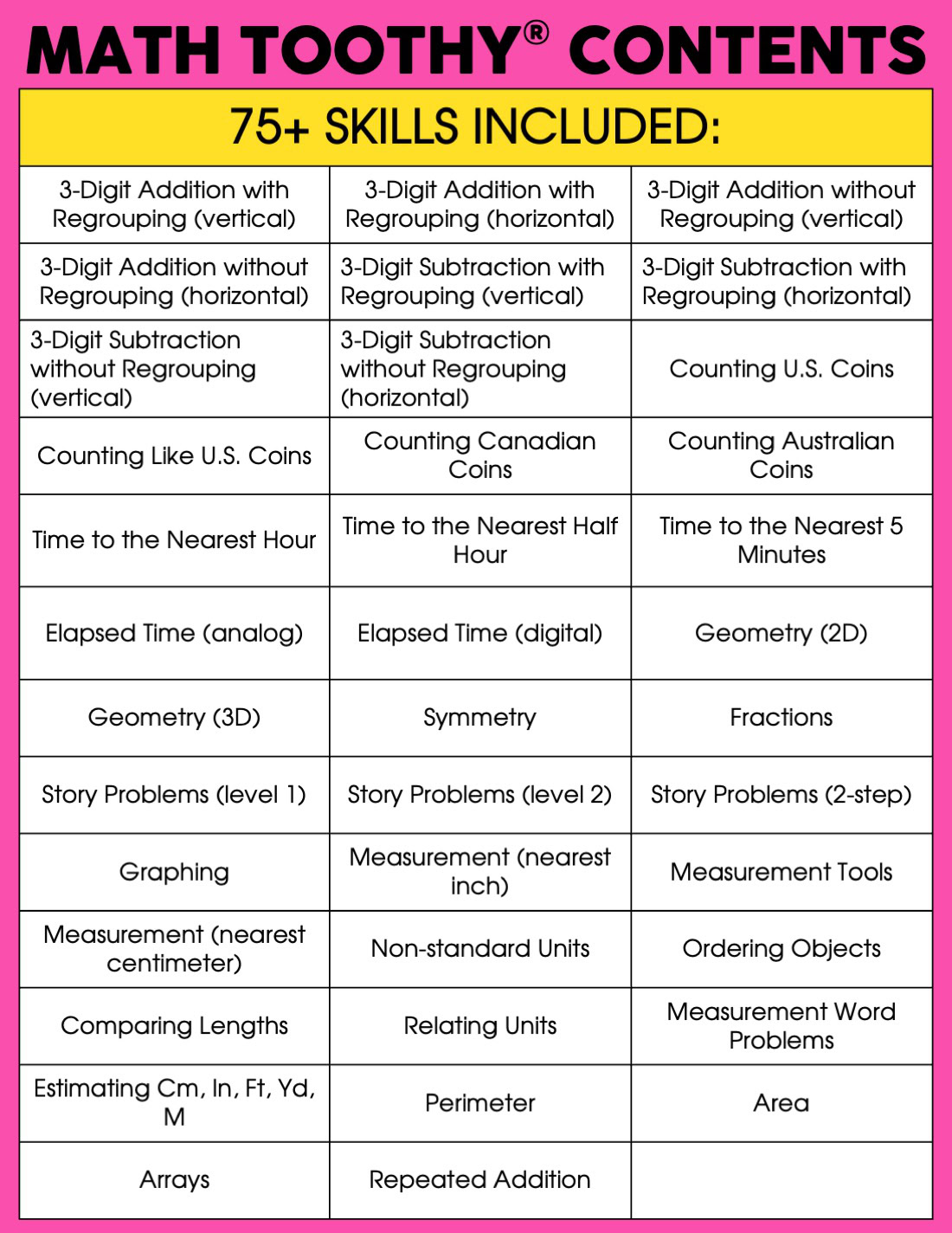
  • 3-Digit Addition with Regrouping (vertical & horizontal)
  • 3-Digit Addition without Regrouping (vertical & horizontal)
  • 3-Digit Subtraction with Regrouping (vertical & horizontal)
  • 3-Digit Subtraction without Regrouping (vertical & horizontal)
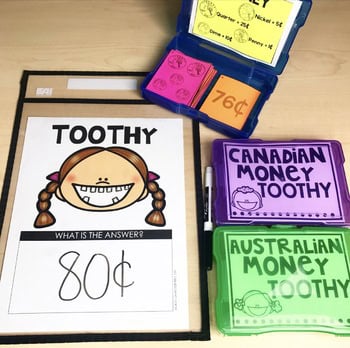
  • Counting U.S. Coins
  • Counting Like U.S. Coins
  • Counting Canadian Coins
  • Counting Australian Coins
  • Time to the Nearest Hour & 1/2 Hour
  • Time to the Nearest 5 Minutes
  • Elapsed Time (analog & digital)
  • Geometry (2D & 3D)
  • Symmetry
  • Fractions
  • Story Problems (level 1)
  • Story Problems (level 2)
  • Story Problems (2-step)
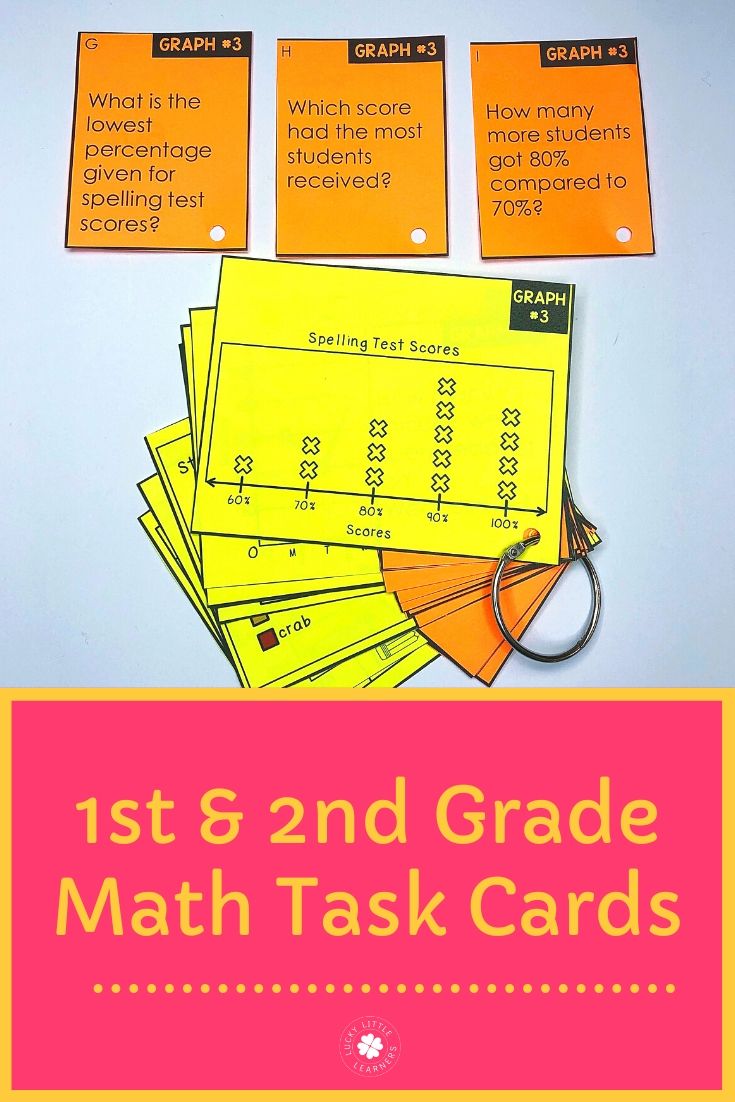
  • Graphing
  • Measurement (nearest inch)
  • Measurement Tools *added March 2021
  • Measurement (nearest centimeter) *added March 2021
  • Non-standard Units *added March 2021
  • Ordering Objects *added March 2021
  • Comparing Lengths *added March 2021
  • Relating Units *added March 2021
  • Measurement Word Problems *added March 2021
  • Estimating Cm, In, Ft, Yd, M *added March 2021
  • Perimeter
  • Area
  • Arrays
  • Repeated Addition

Toothy® task kits are highly engaging task card math games or math centers that allow students to practice math skills and answer questions in a fun, motivating way. The answers on the back of the math task cards make the activity self-paced and self-correcting. Toothy® task kits are highly engaging task card math games or math centers that allow students to practice math skills and answer questions in a fun, motivating way. The answers on the back of the math task cards make the activity self-paced and self-correcting. Toothy® task kits are highly engaging task card math games or math centers that allow students to practice math skills and answer questions in a fun, motivating way. The answers on the back of the math task cards make the activity self-paced and self-correcting.

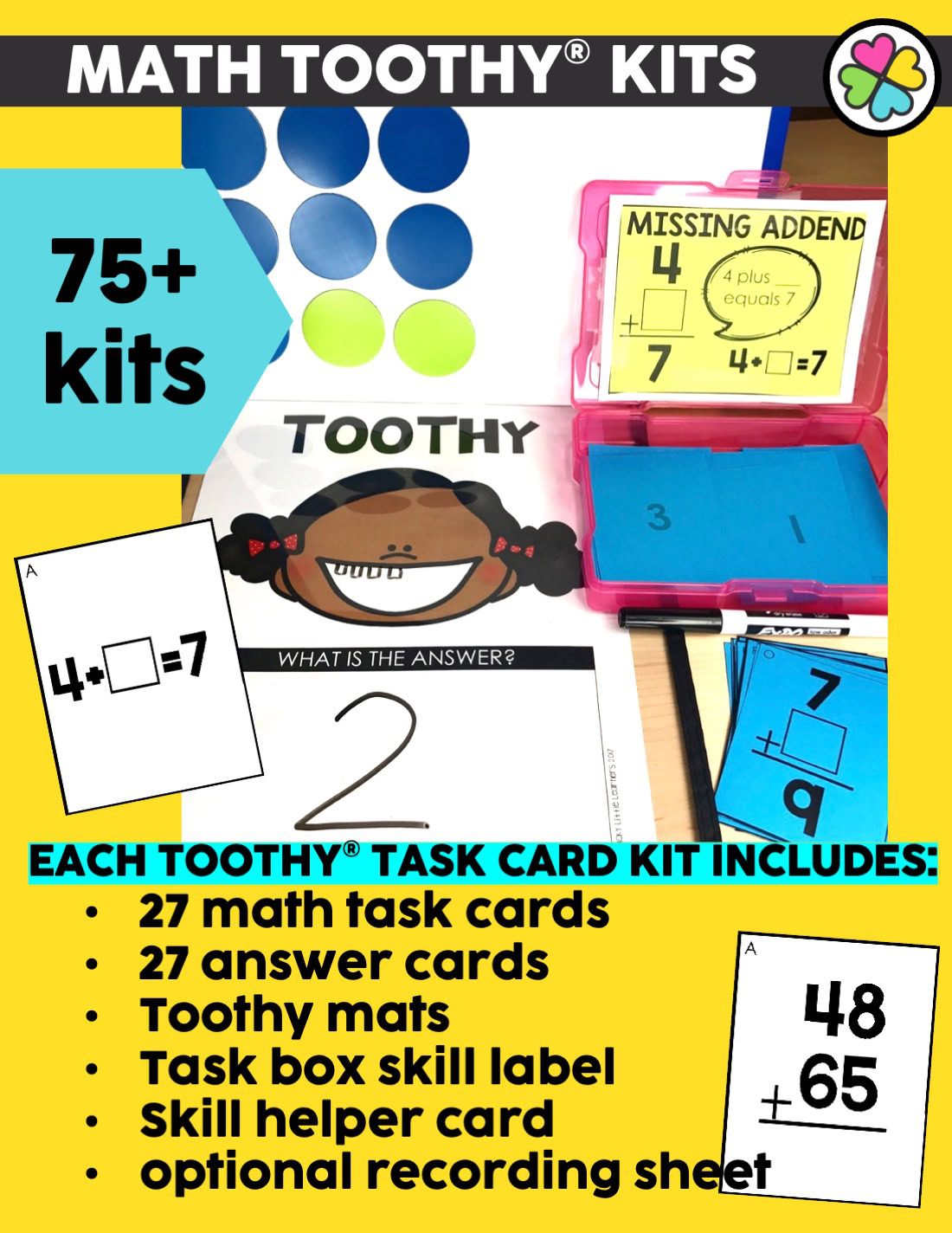
EACH MATH KIT INCLUDES:
-27 math task cards
-27 answer cards
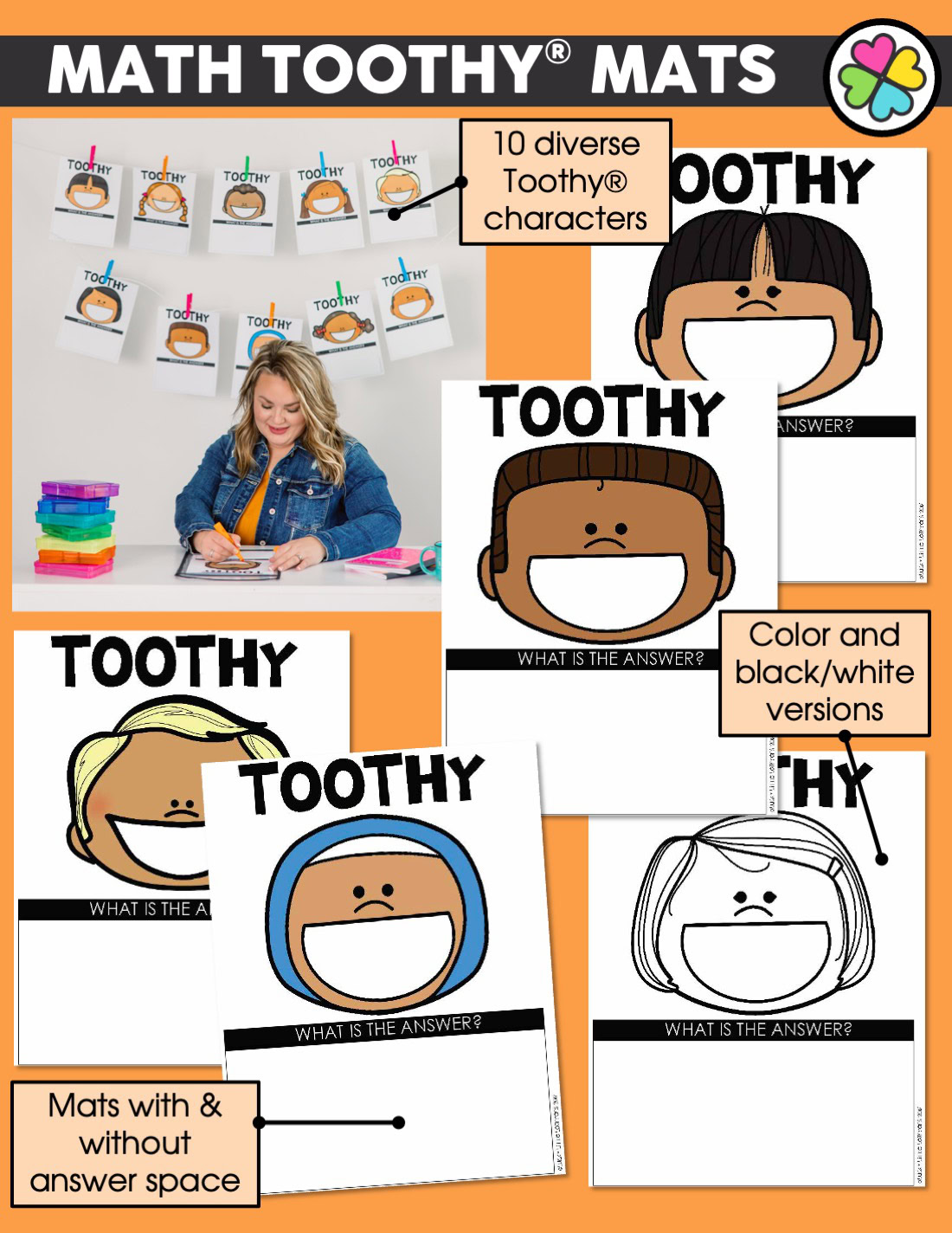
-12 Toothy mats (boy & girl)
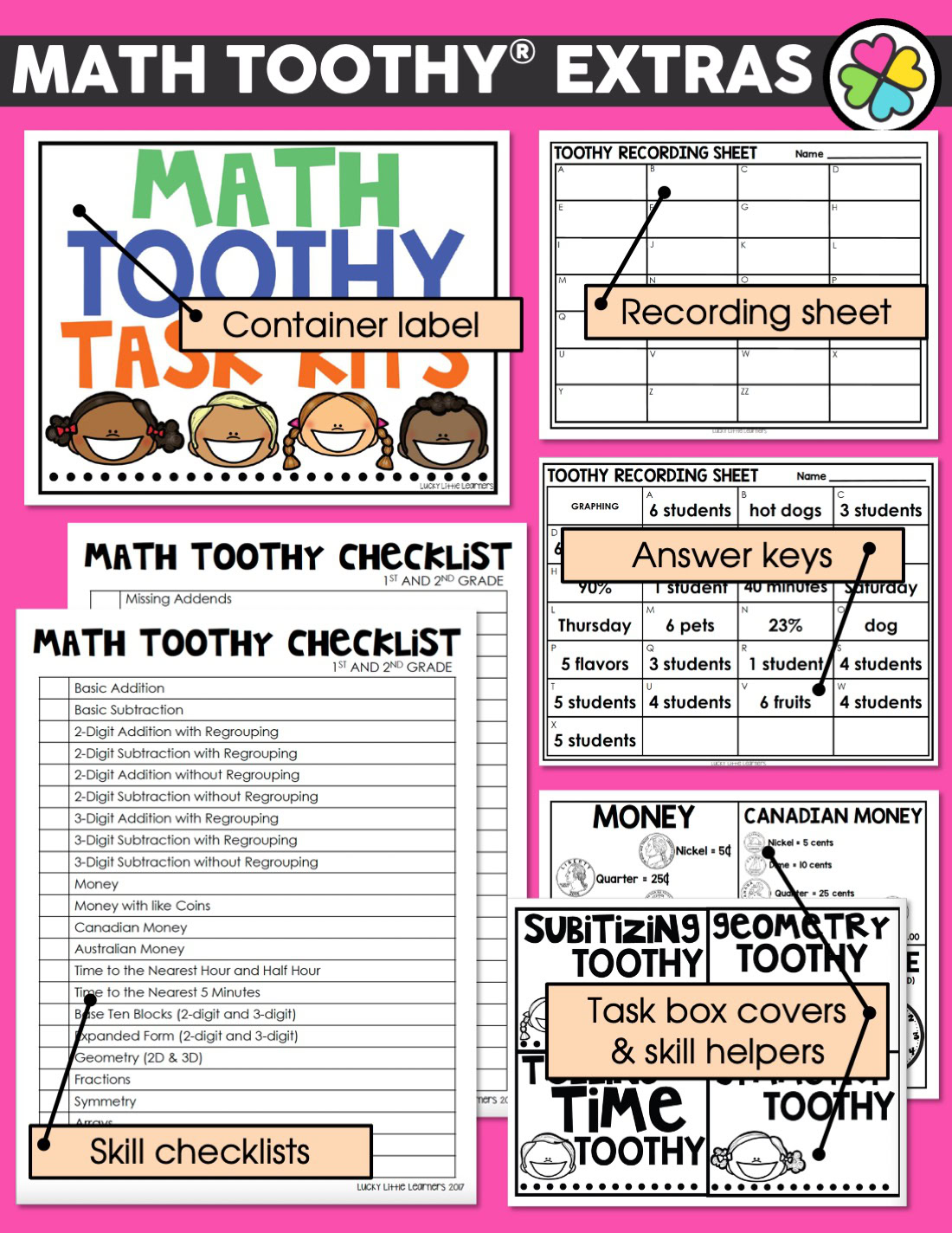
-Toothy checklist of skills
-container labels for each skill set(boy & girl)
-container label for the large container/organizer
-skill helper sheets for each skill set
-optional recording sheet
-directions
-prep suggestions


Have you heard of Toothy® yet?! Toothy® task kits are highly engaging task card math games or math centers that allow students to practice math skills and answer questions in a fun, motivating way. The answers on the back of the math task cards make the activity self-paced and self-correcting.

Teach the rules for Toothy® once at the beginning of the year, then simply switch out the topic each week and use the activity all year!

You can watch a demonstration and explanation of these Toothy Task Kits here: Toothy Facebook Video Tutorial

You can read all about Toothy Task Kits here:
Toothy Task Kits Blog Post
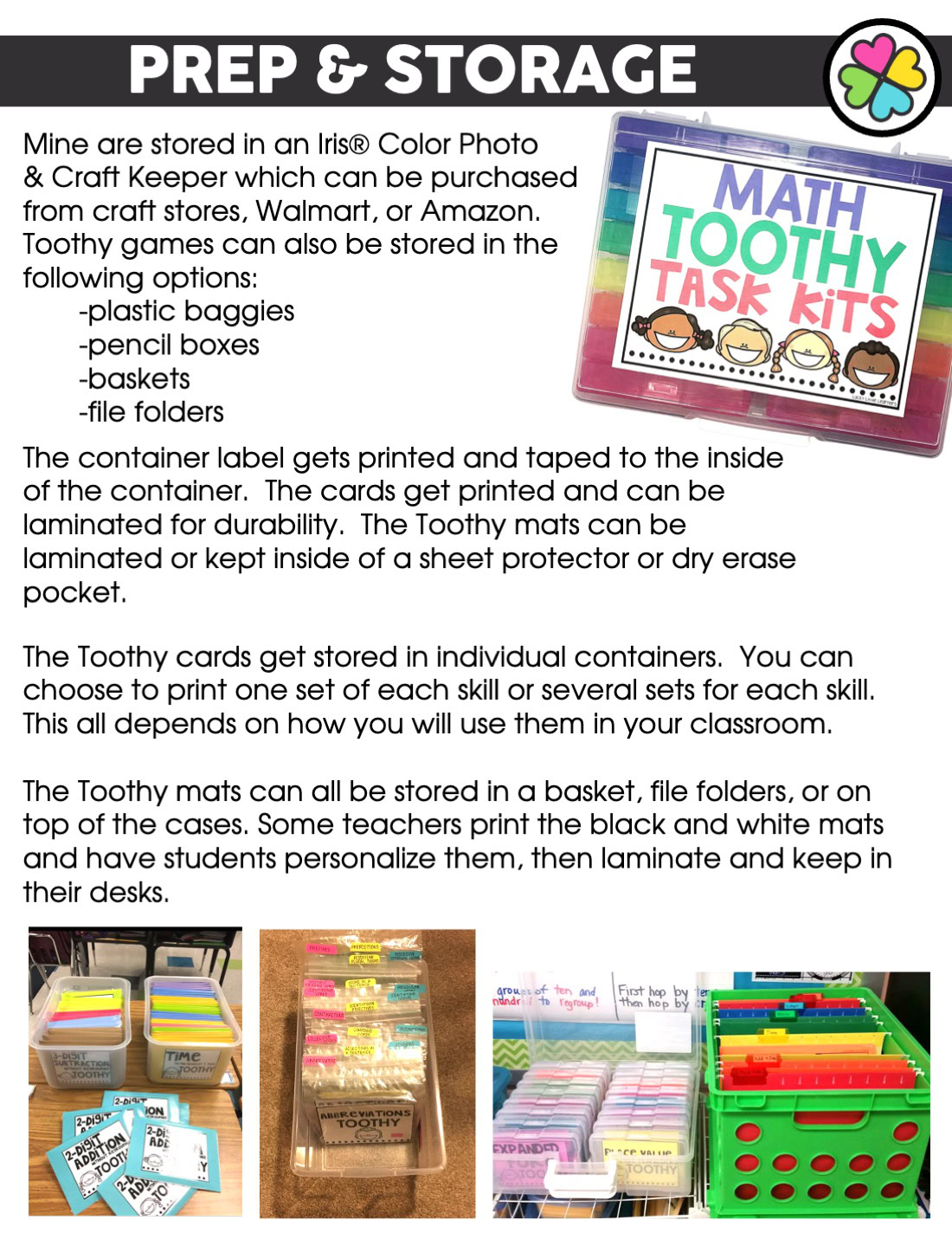
How to Prep Toothy Task Kits

Toothy® task kits are highly engaging task card math games or math centers that allow students to practice math skills and answer questions in a fun, motivating way. The answers on the back of the math task cards make the activity self-paced and self-correcting. Toothy® task kits are highly engaging task card math games or math centers that allow students to practice math skills and answer questions in a fun, motivating way. The answers on the back of the math task cards make the activity self-paced and self-correcting.

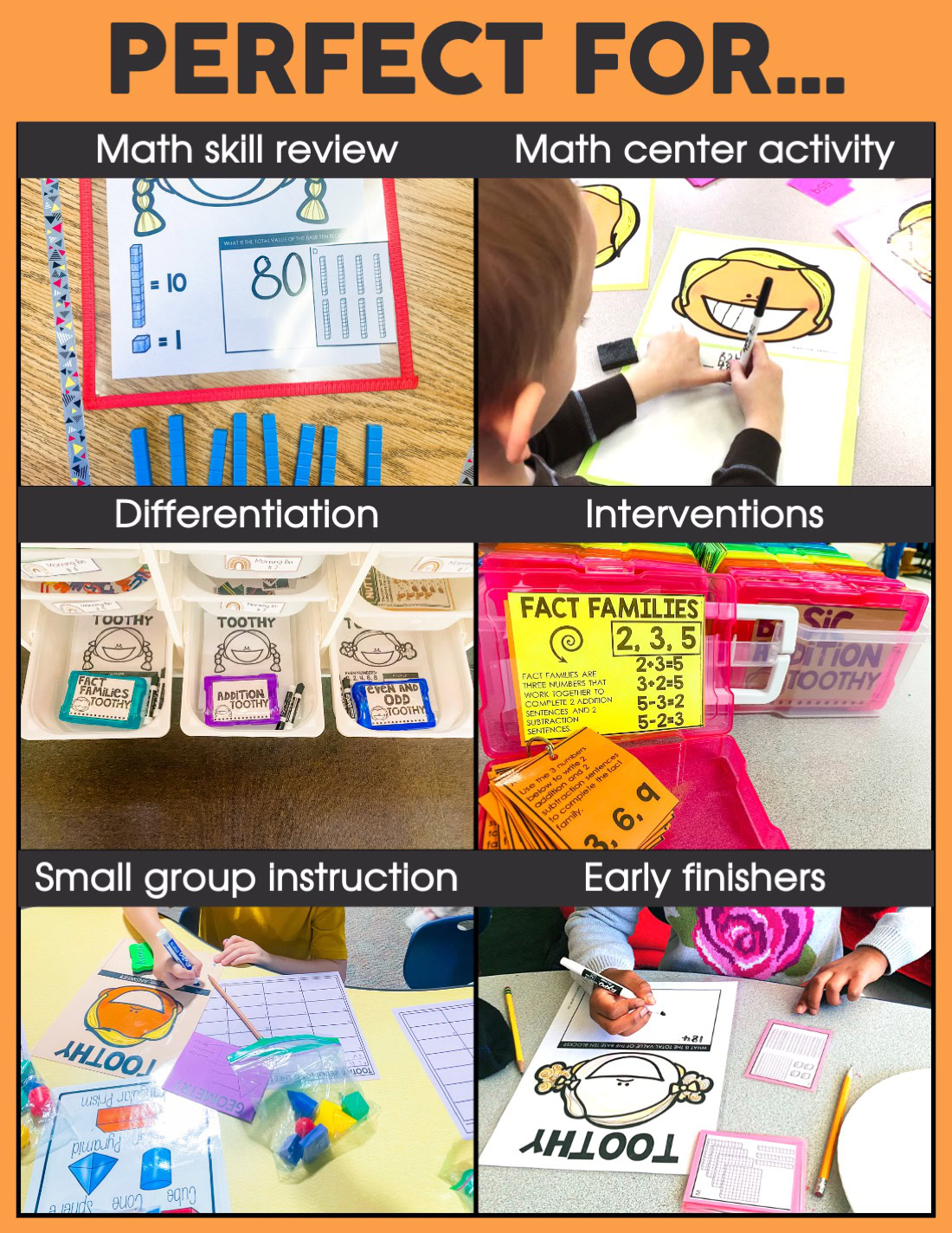
Toothy Task Kits are a great option for your students as centers, early finishers, or even morning work. The Toothy mats make these activities highly engaging! The answers on the back of the cards allow for these activities to be self-paced and self-correcting.

Toothy® task kits are highly engaging task card math games or math centers that allow students to practice math skills and answer questions in a fun, motivating way. The answers on the back of the math task cards make the activity self-paced and self-correcting.


Order three objects by length; compare the lengths of two objects indirectly by using a third object.
Express the length of an object as a whole number of length units, by laying multiple copies of a shorter object (the length unit) end to end; understand that the length measurement of an object is the number of same-size length units that span it with no gaps or overlaps.
Tell and write time in hours and half-hours using analog and digital clocks.
Organize, represent, and interpret data with up to three categories; ask and answer questions about the total number of data points, how many in each category, and how many more or less are in one category than in another.
Measure the length of an object by selecting and using appropriate tools such as rulers, yardsticks, meter sticks, and measuring tapes.
Measure the length of an object twice, using length units of different lengths for the two measurements; describe how the two measurements relate to the size of the unit chosen.
Estimate lengths using units of inches, feet, centimeters, and meters.
Measure to determine how much longer one object is than another, expressing the length difference in terms of a standard length unit.
Use addition and subtraction within 100 to solve word problems involving lengths that are given in the same units, e.g., by using drawings (such as drawings of rulers) and equations with a symbol for the unknown number to represent the problem.
Represent whole numbers as lengths from 0 on a number line diagram with equally spaced points corresponding to the numbers 0, 1, 2,…, and represent whole-number sums and differences within 100 on a number line diagram.
Tell and write time from analog and digital clocks to the nearest five minutes, using a.m. and p.m.
Solve word problems involving dollar bills, quarters, dimes, nickels, and pennies, using $ and ¢ symbols appropriately. Example: If you have 2 dimes and 3 pennies, how many cents do you have?
Generate measurement data by measuring lengths of several objects to the nearest whole unit, or by making repeated measurements of the same object. Show the measurements by making a line plot, where the horizontal scale is marked off in whole-number units.
Draw a picture graph and a bar graph (with single-unit scale) to represent a data set with up to four categories. Solve simple put-together, take-apart, and compare problems using information presented in a bar graph.
Count to 120, starting at any number less than 120. In this range, read and write numerals and represent a number of objects with a written numeral.
Understand that the two digits of a two-digit number represent amounts of tens and ones. Understand the following as special cases:
10 can be thought of as a bundle of ten ones – called a “ten.”
The numbers from 11 to 19 are composed of a ten and one, two, three, four, five, six, seven, eight, or nine ones.
The numbers 10, 20, 30, 40, 50, 60, 70, 80, 90 refer to one, two, three, four, five, six, seven, eight, or nine tens (and 0 ones).
Compare two two-digit numbers based on meanings of the tens and ones digits, recording the results of comparisons with the symbols >, =, and <.
Add within 100, including adding a two-digit number and a one-digit number, and adding a two-digit number and a multiple of 10, using concrete models or drawings and strategies based on place value, properties of operations, and/or the relationship between addition and subtraction; relate the strategy to a written method and explain the reasoning used. Understand that in adding two-digit numbers, one adds tens and tens, ones and ones; and sometimes it is necessary to compose a ten.
Given a two-digit number, mentally find 10 more or 10 less than the number, without having to count; explain the reasoning used.
Subtract multiples of 10 in the range 10-90 from multiples of 10 in the range 10-90 (positive or zero differences), using concrete models or drawings and strategies based on place value, properties of operations, and/or the relationship between addition and subtraction; relate the strategy to a written method and explain the reasoning used.
Understand that the three digits of a three-digit number represent amounts of hundreds, tens, and ones; e.g., 706 equals 7 hundreds, 0 tens, and 6 ones. Understand the following as special cases:
100 can be thought of as a bundle of ten tens – called a “hundred.”
The numbers 100, 200, 300, 400, 500, 600, 700, 800, 900 refer to one, two, three, four, five, six, seven, eight, or nine hundreds (and 0 tens and 0 ones).
Count within 1000; skip-count by 5s, 10s, and 100s.
Read and write numbers to 1000 using base-ten numerals, number names, and expanded form.
Compare two three-digit numbers based on meanings of the hundreds, tens, and ones digits, using >, =, and < symbols to record the results of comparisons.
Fluently add and subtract within 100 using strategies based on place value, properties of operations, and/or the relationship between addition and subtraction.
Add up to four two-digit numbers using strategies based on place value and properties of operations.
Add and subtract within 1000, using concrete models or drawings and strategies based on place value, properties of operations, and/or the relationship between addition and subtraction; relate the strategy to a written method. Understand that in adding or subtracting three-digit numbers, one adds or subtracts hundreds and hundreds, tens and tens, ones and ones; and sometimes it is necessary to compose or decompose tens or hundreds.
Mentally add 10 or 100 to a given number 100–900, and mentally subtract 10 or 100 from a given number 100–900.
Explain why addition and subtraction strategies work, using place value and the properties of operations.
Use addition and subtraction within 20 to solve word problems involving situations of adding to, taking from, putting together, taking apart, and comparing, with unknowns in all positions, e.g., by using objects, drawings, and equations with a symbol for the unknown number to represent the problem.
Solve word problems that call for addition of three whole numbers whose sum is less than or equal to 20, e.g., by using objects, drawings, and equations with a symbol for the unknown number to represent the problem.
Apply properties of operations as strategies to add and subtract. If 8 + 3 = 11 is known, then 3 + 8 = 11 is also known. (Commutative property of addition.) To add 2 + 6 + 4, the second two numbers can be added to make a ten, so 2 + 6 + 4 = 2 + 10 = 12. (Associative property of addition.)
Understand subtraction as an unknown-addend problem. For example, subtract 10 – 8 by finding the number that makes 10 when added to 8.
Relate counting to addition and subtraction (e.g., by counting on 2 to add 2).
Add and subtract within 20, demonstrating fluency for addition and subtraction within 10. Use strategies such as counting on; making ten (e.g., 8 + 6 = 8 + 2 + 4 = 10 + 4 = 14); decomposing a number leading to a ten (e.g., 13 – 4 = 13 – 3 – 1 = 10 – 1 = 9); using the relationship between addition and subtraction (e.g., knowing that 8 + 4 = 12, one knows 12 – 8 = 4); and creating equivalent but easier or known sums (e.g., adding 6 + 7 by creating the known equivalent 6 + 6 + 1 = 12 + 1 = 13).
Understand the meaning of the equal sign, and determine if equations involving addition and subtraction are true or false. For example, which of the following equations are true and which are false? 6 = 6, 7 = 8 – 1, 5 + 2 = 2 + 5, 4 + 1 = 5 + 2.
Determine the unknown whole number in an addition or subtraction equation relating three whole numbers. For example, determine the unknown number that makes the equation true in each of the equations 8 + ? = 11, 5 = ▯ – 3, 6 + 6 = ▯.
Use addition and subtraction within 100 to solve one- and two-step word problems involving situations of adding to, taking from, putting together, taking apart, and comparing, with unknowns in all positions, e.g., by using drawings and equations with a symbol for the unknown number to represent the problem.
Fluently add and subtract within 20 using mental strategies. By end of Grade 2, know from memory all sums of two one-digit numbers.
Determine whether a group of objects (up to 20) has an odd or even number of members, e.g., by pairing objects or counting them by 2s; write an equation to express an even number as a sum of two equal addends.
Use addition to find the total number of objects arranged in rectangular arrays with up to 5 rows and up to 5 columns; write an equation to express the total as a sum of equal addends.
Distinguish between defining attributes (e.g., triangles are closed and three-sided) versus non-defining attributes (e.g., color, orientation, overall size); build and draw shapes to possess defining attributes.
Compose two-dimensional shapes (rectangles, squares, trapezoids, triangles, half-circles, and quarter-circles) or three-dimensional shapes (cubes, right rectangular prisms, right circular cones, and right circular cylinders) to create a composite shape, and compose new shapes from the composite shape.
Partition circles and rectangles into two and four equal shares, describe the shares using the words halves, fourths, and quarters, and use the phrases half of, fourth of, and quarter of. Describe the whole as two of, or four of the shares. Understand for these examples that decomposing into more equal shares creates smaller shares.
Recognize and draw shapes having specified attributes, such as a given number of angles or a given number of equal faces. Identify triangles, quadrilaterals, pentagons, hexagons, and cubes.
Partition a rectangle into rows and columns of same-size squares and count to find the total number of them.
Partition circles and rectangles into two, three, or four equal shares, describe the shares using the words halves, thirds, half of, a third of, etc., and describe the whole as two halves, three thirds, four fourths. Recognize that equal shares of identical wholes need not have the same shape.


⭐⭐⭐⭐⭐ Kids love these toothy games! My favorite part is that they are self checking!!! Helps students to know if they are on the right track or not! – Whitney K.

⭐⭐⭐⭐⭐ After purchasing this product and seeing how much fun my students had with it, I ended up buying an All Access subscription to Lucky Little Learners. It’s totally worth it!! – Beth C.

Frequently Asked Questions

Your license is for one teacher/classroom; please share the product link so other teachers can purchase their own copy.

After checkout you’ll get a download link on the order confirmation page and by email, and you can always re‑download from your account under My Account → Downloads.

No, this is a one‑time purchase and you keep ongoing access to the resource in your account.

The resource details list all included formats (for example, printable PDFs and other compatible classroom file types).​

10248 reviews for Math Toothy® Bundle for 1st and 2nd Grade

  1. Heather K. –

    Toothy activities make a perfect morning activity. Students come staggering in and pull these out once they unpack. They love them, and I highly recommend.

  2. Pippa A. –

    The kindergarteners I student taught loved this game! I love that they had more autonomy over the game because they colored in their own faces. Plus, it worked well as a whole group activity and as a center/early finishers activity. I highly recommend this resource to anyone trading K-2nd!

  3. Alyssa B. –

    These Toothy® Math Games, Activities, and Task Cards are a fun and engaging resource for a self-contained special education classroom! The game-based format gives students an opportunity to practice important math skills while keeping learning interactive and motivating.

    I can see these being used during small-group math instruction, intervention, math centers, morning work, or as an independent task box activity. The task cards can be differentiated by skill level, and teachers can provide manipulatives, number lines, visual models, or prompting for students who need additional support. They would also be useful for repeated practice and collecting work samples related to IEP math goals.

    I especially appreciate having a resource that can make math practice feel more like a game than traditional worksheet work. These activities would be a great way to build math fluency, confidence, and independence while keeping students actively engaged!

    • Angie –

      Hi Alyssa,

      Thanks for your feedback! It’s so important to me that everything we create makes your teaching life better.

      If you like this resource, you’re going to love our weekly emails. Filled with freebies and sales alerts. Click here to sign up: https://luckylittlelearners.lpages.co/i-want-weekly-freebies/

      Thank you for being part of our community!

      – Angie Olson

      Lucky Little Learners

  4. Courtney M. –

    All toothy’s are great!! Takes some prep if you want nice reusable activities but worth it!

    • Angie –

      Hello Courtney,

      Thank you for this feedback! It’s very important to me that everything we create makes teaching better for you and your students.

      Since you liked this resource, you’ll love our weekly emails. They’re filled with freebies and sales alerts. Click here to sign up: https://luckylittlelearners.lpages.co/i-want-weekly-freebies/

      Thanks for being part of our community!

      – Angie Olson

      Lucky Little Learners

  5. Bailee C. –

    It takes a lot of time to prep, but it is worth it in the end! Love all of toothy.

  6. Melinda J. –

    This is a great resource for math review. Another great activity to use in stations.

  7. Stacey Clay –

    This is a great resource. Well crafted and perfect for my classroom. Thanks!

  8. Kim Crosier –

    If you are looking for a resource that has everything you need to create fun and engaging math centers for your students, this is it!

Add a review

Your email address will not be published. Required fields are marked *

Shopping cart0
There are no products in the cart!
Continue shopping
0